You have 0 items in your cart

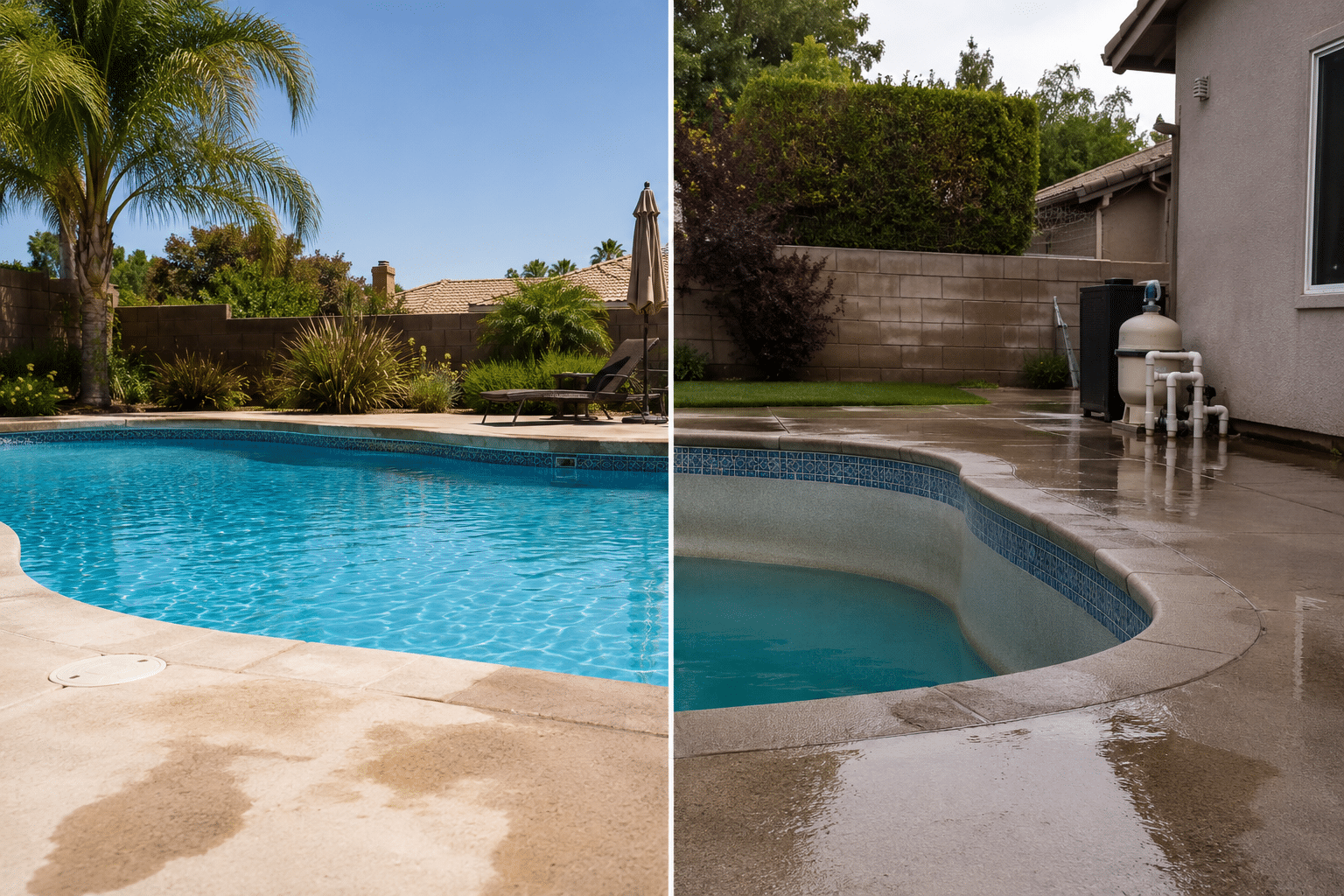


Every pool loses some water. Hot weather, wind, low humidity, swimming, splashout, backwashing, and running water features can all lower the water level. But when you feel like you are constantly dragging out the hose, it is fair to ask the bigger question: is this normal evaporation, or is my pool leaking?
For homeowners in London, Stratford, and surrounding Southwestern Ontario communities, this question matters because a small leak can become a bigger problem if it is ignored. A leaking pool can waste water, throw off chemical balance, stress the equipment, damage surrounding soil, and in some cases affect patios, decks, landscaping, or pool structure.
The good news is that there are simple ways to narrow down what is happening before you panic. This guide explains the difference between evaporation and leaks, how to do a basic bucket test, what warning signs to watch for, and when it makes sense to book a professional onsite diagnostic.
Quick answer:
If your pool and a bucket of pool water lose the same amount over 24 hours, the loss is likely evaporation. If the pool level drops noticeably more than the bucket, you may have a leak.
Normal evaporation is not one fixed number. A pool in full sun on a hot, dry, windy day can lose more water than a shaded pool on a calm, humid day. A heated pool can also lose more water, especially when warm water meets cooler night air. That is why pool water loss often feels more noticeable during heat waves, windy stretches, and late-summer temperature swings.
A general planning range many pool owners hear is around half an inch to two inches per week, but that can vary depending on weather, pool exposure, water temperature, whether the pool is covered, and how much the pool is used. Heavy swimming, kids jumping in, water features, backwashing, and overflow after rain can all make the water level drop for reasons that are not leaks.
| Water Loss Cause | What It Looks Like | Usually a Leak? |
|---|---|---|
| Evaporation | Gradual water loss, often worse in hot, dry, windy weather | No, if the bucket test matches |
| Splashout | Water loss after heavy swimming, jumping, games, or parties | Not usually |
| Backwashing or waste setting | Water drops after filter cleaning or equipment use | Not always, but a valve issue can cause ongoing loss |
| Leak | Pool loses more water than a bucket test, or loss continues consistently | Possible and worth diagnosing |
If you are topping up the pool every day, losing water overnight, or seeing the level fall below normal evaporation expectations, it is time to test instead of guessing.
Evaporation is the process of water leaving the pool surface and moving into the air. The more exposed the pool is, the more conditions can affect it. In Southwestern Ontario, homeowners often notice higher water loss during warm spells, windy days, low-humidity weather, and nights when the pool water is warmer than the air.
A pool cover can make a major difference because most evaporation happens from the exposed water surface. Covering the pool when it is not in use can reduce water loss, help hold heat, reduce debris, and make chemical balance easier to maintain.
| Evaporation Factor | Why It Increases Water Loss |
|---|---|
| Wind | Moves moist air away from the pool surface and speeds evaporation |
| Low humidity | Dry air can absorb more moisture from the pool surface |
| Warm water | A warm pool can lose more water, especially when the air cools overnight |
| No cover | Leaves the full water surface exposed to sun, wind, and dry air |
Helpful tip:
Before assuming you have a leak, look at the weather pattern. A windy heat wave can make water loss look worse than usual. The bucket test helps separate weather-related evaporation from an actual leak.
The bucket test is one of the easiest first checks for pool water loss. The idea is simple: the water inside the bucket is exposed to the same weather as the pool, but it is not connected to the pool structure or plumbing. If the pool drops more than the bucket, that extra loss may point to a leak.
How to Do a Basic Bucket Test:
| Bucket Test Result | What It Usually Means |
|---|---|
| Bucket and pool drop the same amount | Water loss is likely evaporation or weather-related |
| Pool drops more than the bucket | A leak is possible and should be investigated |
| Results are unclear | Repeat the test and reduce variables like splashout, rain, refilling, or backwashing |
Important:
Do not run the test during a pool party, heavy rain, backwashing, refilling, or major splashout. The cleaner the test conditions, the more useful the result.
If the bucket test suggests a leak, the next question is where the water may be going. One helpful clue is whether the pool loses more water when the pump is running or when the system is off.
This is not a perfect diagnosis, but it can help point the inspection in the right direction. A leak that becomes worse when the pump is running may involve pressure-side plumbing, returns, equipment, heater connections, filter fittings, or a valve sending water where it should not. A leak that continues whether the pump is on or off may involve the pool shell, liner, skimmer, light niche, fittings, steps, main drain, or static plumbing.
| Pattern | Possible Area to Inspect | Why It Matters |
|---|---|---|
| Worse with pump running | Pressure-side plumbing, returns, filter, heater, equipment pad, waste line | Pressure can push water out through weak fittings or leaks |
| Worse when pump is off | Suction-side plumbing or underground lines may need review | Some leaks behave differently when suction is not active |
| Same loss pump on or off | Pool shell, liner, fittings, skimmer, light, steps, main drain, static leak | Water may be escaping from a non-pressurized area |
These clues are helpful, but they are not a substitute for a proper inspection. Pool leaks can be tricky, especially when plumbing, liners, lights, skimmers, or underground lines are involved.
A pool leak is not always obvious. Sometimes there is no visible stream of water or wet patch. Instead, the clues show up slowly through water level changes, equipment behaviour, chemical demand, or soft areas around the pool.
| Warning Sign | What It Could Suggest |
|---|---|
| Water level drops faster than the bucket test | Possible active leak |
| Air bubbles returning to the pool | Possible suction-side air leak or equipment issue |
| Pump loses prime | Possible air leak, low water, or suction issue |
| Wet or soft areas around the pool | Possible underground leak or drainage issue |
| Pool constantly needs chemicals | Frequent refilling can dilute water chemistry |
| Water stops dropping at a certain level | The leak may be near that level, such as a skimmer, return, light, stair, fitting, or liner area |
Do not ignore repeated water loss.
Even a slow leak can create extra water bills, chemical imbalance, equipment strain, and possible damage around the pool area over time.
Pool leaks can happen in many different places, and the type of pool matters. Vinyl liner pools, fiberglass pools, concrete pools, above-ground pools, onground pools, and inground pools all have different components to inspect.
| Leak Area | What to Look For | Why It Matters |
|---|---|---|
| Skimmer | Cracks, separation, loose faceplate, water loss near skimmer level | Skimmers are common stress points where movement and fittings meet |
| Returns and fittings | Drips, loose fittings, water loss near return level | Fittings penetrate the pool wall and can leak around seals or connections |
| Lights | Water loss near light level, loose niche, staining, visible gaps | Light niches and conduits can be difficult to diagnose without experience |
| Liner | Small tears, punctures, wrinkles, soft spots, water behind liner | Tiny liner holes can lose surprising amounts of water over time |
| Equipment pad | Dripping pump, filter, heater, unions, valves, or waste line | Equipment leaks may only appear while the system is running |
| Underground plumbing | Soft ground, unexplained water loss, pump behaviour changes | Underground leaks need proper diagnosis before digging or repairing |
If the water stops dropping at the same height every time, that level can be an important clue. It may point toward a skimmer, return, light, step, fitting, liner seam, or another component at that elevation.
When homeowners suspect a leak, it is tempting to start adding products, draining water, pulling parts apart, or guessing at repairs. That can make the problem harder to diagnose and sometimes more expensive to fix.
Avoid These Mistakes:
Smart move:
Document the water loss, do a bucket test, note whether the pump was on or off, take photos of suspicious areas, and then book an onsite diagnostic if the problem continues.
A bucket test is helpful, but it does not always tell the full story. If the pool is losing water faster than the bucket, if the water level keeps dropping below normal, or if equipment behaviour has changed, a professional visit can save time and prevent guesswork.
Custom LeisureScapes offers an onsite diagnostic for homeowners who need a knowledgeable look at what is happening in the pool, equipment area, plumbing, or backyard setup.
| Book a Diagnostic If… | Why It Helps |
|---|---|
| The bucket test points to a leak | You need to narrow down where water is escaping |
| You are refilling constantly | Ongoing refilling can waste water and disrupt chemical balance |
| The pump is losing prime or pulling air | Equipment behaviour can point toward suction or system issues |
| You see wet ground, sinking, or erosion | Water may be moving where it should not be |
| You are planning repairs or upgrades | It is better to understand the pool condition before investing in bigger work |
The goal of a diagnostic is not to scare you into repairs. It is to replace guessing with information so you can make the right decision.
If the bucket test shows the pool and bucket are losing water at the same rate, the issue is likely evaporation, not a leak. That is good news, but it still means you may want to reduce unnecessary water loss.
| Evaporation Reduction Step | How It Helps |
|---|---|
| Use a pool cover | Reduces exposed water surface and can dramatically reduce evaporation |
| Reduce unnecessary water feature run time | Less aeration and splash can mean less water loss |
| Limit splashout | Heavy play and jumping can remove more water than people realize |
| Track water level weekly | Helps you recognize what is normal for your pool and spot sudden changes faster |
Best habit:
Mark or record your water level at the same time each week. Patterns are easier to understand when you are not relying on memory.
If your pool is older, constantly losing water, or becoming frustrating to maintain, a diagnostic can also help you decide whether a repair, renovation, or bigger backyard plan makes sense. Sometimes the right move is a targeted repair. Other times, homeowners are already thinking about a larger backyard upgrade and need to understand the current pool condition first.
A free backyard consultation can help you look at the bigger picture if you are considering changes to your pool, equipment, layout, or outdoor living space.
Before investing in upgrades, make sure the pool is not quietly losing water through a problem that should be addressed first.
Stop Guessing Where the Water Is Going
If your pool is losing more water than usual, start with a simple bucket test. If the results suggest a leak, or if you are still unsure, Custom LeisureScapes can help you take the next step with a professional onsite review.
Whether the issue is evaporation, equipment, plumbing, liner, fittings, or something else, the right information can help you protect your pool, your yard, and your budget.
Click here to book your onsite diagnostic. 🔎
Planning a bigger backyard project? Book your free consultation here. 🌊✨
 Optimized by Seraphinite Accelerator