You have 0 items in your cart



HOT TUB OWNERSHIP · SOUTHWESTERN ONTARIO
There isn’t one reliable winter electricity price for every hot tub. Your spa’s energy use depends on the model, insulation, cover, water temperature, weather, setup and how you use it. Use your own figures to build a useful estimate—not a promise about your next bill.
Estimate your spa’s daily energy in kilowatt-hours (kWh), multiply by your electricity cost per kWh, then multiply by the number of days you want to estimate. A meter reading is usually a better starting point than the maximum power number printed on a nameplate.
Simple formulakWh per day × electricity rate per kWh × days = estimated electricity cost
A dedicated meter over several representative days is usually more useful than a guess based on heater size.
Use variable per-kWh charges that apply to your plan; fixed monthly fees are not spa energy use.
Cold, wind, cover condition, settings and how often the spa is used can all change consumption.
A hot tub uses electricity to heat water and operate its circulation, filtration and therapy systems. In cold weather, it may need to replace more heat lost through the water surface, cabinet and plumbing. An exposed, windy location and a damaged or poorly fitting cover can behave differently from a sheltered spa with a dry, well-fitting cover. Temperature setting, filter schedule, bathing frequency, water care, spa design and equipment condition also matter.
That is why a cost quoted for someone else’s tub—or a single “average monthly cost”—may not fit yours. Even the same spa can use different amounts during a mild autumn month and a colder, windier stretch. The estimator uses the figures you enter; it does not assume a standard hot tub or insert a made-up local average.
If you have a dedicated spa energy monitor or meter, record its kWh use over a representative number of days. Divide the measured kWh by the number of days to get an average daily use. A longer period is often more representative than one unusually warm or cold day. Use equipment only as directed by its manufacturer and a qualified electrician; never improvise electrical metering around spa equipment.
Check your owner’s manual or manufacturer documentation for an energy-consumption figure and note its test conditions. A standard-condition result is useful context, but your outdoor winter conditions may differ. If documentation gives only a heater rating in watts or kilowatts, that is power—not energy used per day. You also need a reasonable estimate of how long the heater actually runs.
The calculator multiplies heater power (kW) by estimated heater-on hours per day, then adds any other daily spa energy you enter. For example, a hypothetical 4 kW heater running an estimated 3 hours per day uses 12 kWh for heating; adding 2 kWh of other spa use gives 14 kWh/day. These are sample inputs—not typical-use claims. Avoid counting the same pump or equipment twice.
CUSTOM LEISURESCAPES · WINTER ENERGY ESTIMATE
Use your own meter or manual figures, your electricity rate and the number of months you want to estimate. The result is a planning estimate—not a prediction of your exact bill.
Suppose your measured average is 8 kWh a day, your variable rate is 15¢ per kWh, and you are estimating 30 days.
8 × $0.15 × 30 = $36Illustrative arithmetic only—this is not a typical hot-tub cost or a local rate.
Change any of those inputs and the answer changes. The estimator uses an average month (365.25 ÷ 12 days) when you enter months, so its result may not match a specific utility billing period exactly.
Electricity bills can contain usage-based charges and fixed or other charges. This estimator asks for a variable cents-per-kWh rate to estimate the cost of additional spa energy. Do not divide your entire household bill by spa kWh and assume that is the spa’s exact marginal cost: a bill may include household usage, fixed service charges, taxes, credits, delivery charges and other items. Your utility’s bill explanation is the best place to identify per-kWh charges that apply to your plan.
Start with low-risk checks that reduce avoidable heat loss or help you notice a problem. Make one change at a time, keep notes, and compare similar weather and usage periods. Do not trade safe operation or water care for an uncertain saving.
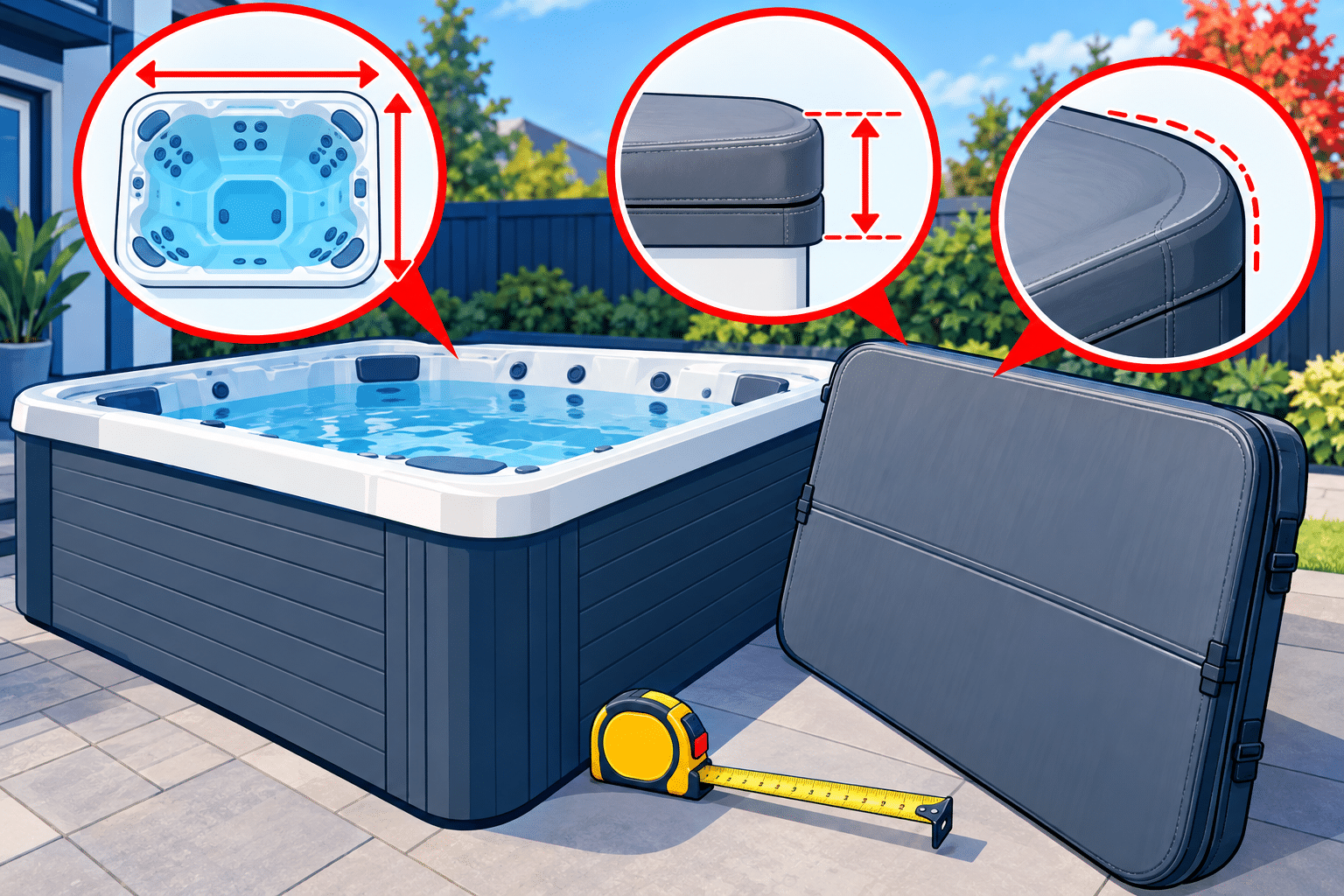
When the spa is not in use, close and secure the cover as its manufacturer recommends. Look for a poor fit, split seams, waterlogging, damage or straps that no longer hold it snugly. If you find a problem, ask a spa professional whether repair or replacement is appropriate for your model.
Why this helps: the cover is part of the barrier between warm water and cold outdoor air. A damaged or ill-fitting cover can let more heat escape, though the actual energy effect depends on the spa and conditions.
Notice whether the spa is exposed to strong wind. If you are considering a windbreak or enclosure, preserve required ventilation, service access, drainage and manufacturer clearances; get qualified advice before building around equipment.
Why this helps: wind can increase heat loss from exposed surfaces. A safe, suitable shelter may help, but it should never block equipment airflow or access.
Check the owner’s manual for recommended temperature, filtration and winter or freeze-protection settings. Ask the manufacturer or a qualified service professional before changing them—especially before lowering the temperature substantially or switching the spa off in freezing weather.
Safety first: incorrect settings or power-off decisions can create water-quality, freeze or equipment risks. There is no one safe “money-saving” setting for every model.
Clean or replace filters at the interval in your manual and follow the spa’s water-care directions. If flow, heating or operation seems unusual, check the owner-approved basics and arrange qualified service rather than opening electrical panels or guessing at a repair.
Why this helps: good routine care helps the system operate as intended and can reveal issues earlier; it cannot guarantee a lower bill.
Record meter readings, dates, outdoor conditions, temperature setting and bathing pattern. Compare periods with similar lengths and note changes in household rates or other electricity use. If possible, use a dedicated spa meter rather than relying on total-home bills.
Why this helps: a simple record helps separate a real change from a colder month, longer billing cycle or different household routine.
If your cover is visibly deteriorated, read Custom LeisureScapes’ hot tub cover information. If the spa is not heating or operating normally, see the hot tub service-call options. Do not open electrical equipment or attempt repairs unless qualified.
The estimate is useful for planning and comparing scenarios using your own assumptions. It cannot verify your spa’s efficiency, predict the weather, read your utility account or guarantee future bills. Actual energy use may be higher or lower than the result, and the estimate excludes water, chemicals, maintenance, repairs, fixed bill charges and other household electricity.
For the clearest real-world picture, compare energy readings over a representative period and record the dates, outdoor conditions, set temperature and usage pattern. If you only have a utility bill, treat a before-and-after comparison as a rough clue—not proof that every change came from the hot tub.
Usually it lists electrical ratings such as voltage, current or component power. Those describe power or electrical requirements; daily kWh also depends on how long equipment runs. Use a daily kWh figure or meter reading where available, and follow the manual.
The heater’s kW rating alone is not a daily kWh figure. Multiplying heater kW by estimated hours actually heating gives a rough heating-energy estimate. Runtime changes with outdoor conditions, temperature, insulation, cover and use, so this is less certain than measuring kWh.
Only if their energy is not already included in your meter reading or daily kWh number. With the equipment method, add only other use you can estimate without counting equipment twice.
No. It estimates variable electricity for the spa from your inputs. It does not include fixed bill charges, the rest of your home’s electricity, water, chemicals or maintenance.
Do not simply switch it off or change freeze-protection settings without checking your owner’s manual and getting qualified advice. Water and plumbing can be vulnerable to freezing. If you do not intend to use the spa, ask a qualified spa professional about the correct winter plan for your model and conditions.
Custom LeisureScapes serves hot tub owners in London, Stratford and Southwestern Ontario. If the spa is not heating properly or you are concerned about its operation, contact the team to discuss service options.
Estimator note: Results depend on the information entered and are for planning only. They are not a quote, bill forecast, energy-efficiency rating or guarantee of savings. Follow your spa owner’s manual and consult a qualified professional for electrical or equipment concerns.
 Optimized by Seraphinite Accelerator