You have 0 items in your cart


Custom LeisureScapes · London and Stratford
Measure the water you want to cover, then check whether the blanket reaches both edges. This guide shows exactly where to put the tape, how to handle a step that sticks out, and what to measure before you buy a reel.
The short answer
Use the inside dimensions at the normal waterline. For a round pool, measure the diameter through the centre. For an oval, rectangle or freeform pool, measure the full length and width at right angles. Include any projecting steps you want to cover.

Measure
A tape measure, a sketch and a second person make this easier than trying to work backward from a model name. Record what you actually measure, including partial inches.
Measure where the pool wall meets the water at its usual operating level. Pool coping, the top rail and the surrounding deck can extend past this reference point, especially on an above-ground pool. Measurements across those surfaces may be useful for a reel, but they answer a different question than how much floating blanket you need.
With the pool clear of swimmers, have two adults on stable, dry footing align the tape between opposite sides. Keep the tape straight and measure horizontally between the points you’ve marked at the inside edge. Follow the actual waterline shape in your sketch even if that line sits a little inboard of the deck edge. If you can’t reach the correct points from a secure position, use the pool plans or ask the installer to confirm the dimensions.
Label the longest direction and mark the end with the steps, ladder or a fence. If you plan to use a reel, add it to the drawing. A photo from two opposite ends can show why a blanket that nominally fits the pool might still be awkward to remove from one end of the deck.

Measure across the centre to get the true inside diameter. A line off centre will read too short. Confirm with a second measurement across the middle at right angles, especially if the pool is older or you’re unsure you found its centre.
Measure between the farthest ends, then across the widest part. An oval with two straighter long sides and rounded ends can share the same advertised size as a more elliptical shape. Compare the end profiles before cutting or buying a closely sized oval blanket.
Measure along the longest direction and across the pool at right angles. Compare the widths near each end and in the middle if the walls look uneven. Include the biggest span. Note any clipped or rounded corners separately for the final outline.
Picture a rectangle around all the water you want to cover. Record its full end-to-end span and full width at right angles. The endpoints for each measurement can fall in different parts of the pool. Sketch any projecting steps and the tightest turn in the curve.
Sizing calculator
Enter the pool’s waterline measurements, then add the actual dimensions from a cover listing if you have one. The calculator checks spans and shows how much extra material or shortfall each direction has. Check the outline and product instructions separately.
Using a tape marked in inches? Divide the leftover inches by 12. For example, 14 ft 3 in is 14.25 ft. A blank field is treated as missing, so leave the optional blanket fields empty until you have the product measurements.
Plan view. The dashed outline for a freeform pool shows the rectangle you’d measure around the water.
Choose the shape and enter your measurements to see the size you need to compare.
For a manual check, compare the measured waterline and the listed cover dimensions side by side. A blanket that’s short in either direction cannot cover the full measured outline.
Compare
An exact match on the label is only a useful starting point. Ask how much material the chosen size actually provides and how it should fit at the edge.
A pool measures 27 ft 10 in long by 14 ft 3 in wide. A blanket whose actual dimensions are 28 ft by 14 ft reaches the ends, with two inches to spare in length. It is still three inches short across the width. Moving it to one edge leaves the opposite edge uncovered.
Start with a size that covers both full spans. Check the seller’s actual dimensions, the cover’s profile, and any allowance specified for trimming or reel attachment. A larger blank can be an option when the model permits trimming. A larger number on one side cannot make up for a shortage on the other.
A round or oval cover made to match the pool can save trimming. A rectangular blank can work for an irregular pool when it covers the whole outline and its instructions allow trimming. Check the shape where the cover will be cut, particularly at a deep curve, a wide step or an oval end. Two blanks that are equally large on paper can leave different amounts of usable material along their curved edges.
Look at how the cover will be handled in your own backyard. Compare thickness, weight, warranty, the method for protecting it when off the pool and any compatibility requirements from the reel maker. A stiffer or heavier material can affect how easily you can guide it past the coping, fold it, or wind it neatly. Choose a blanket you can remove fully every time the pool is used.
Step and ledge planner
Choose where the steps sit and whether you want to cover their water. The preview identifies which spans to measure and what to double-check before you buy or cut.
Imagine a rectangular pool that measures 28 by 14 feet, with a centred entry bay that extends two feet beyond one end. If you want a single blanket over the bay, measure the full 30-foot end-to-end span. Keep the 14-foot full width if the entry bay stays inside that width. On your sketch, show the bay separately from the main pool so a retailer can help you work out where to leave the extra material.
If the step sits beside the long wall, it may add width instead. When identifying the measurement rectangle for a curved pool, consider both axes independently. If a wide offset would make the blanket bunch as it winds onto the reel, discuss the removal path and compatible options with Custom before trimming. Any area you choose to leave uncovered remains open to evaporation and debris.
Reel clearance check
A reel has its own dimensions. Use the manufacturer’s setup diagram to enter the reel’s full end-to-end footprint, including supports and handle space when specified. Add a separate depth check if you have the numbers for the room behind the reel.
Measure between the nearest fixed obstacles where the reel would sit. Consider the full handle rotation and the route people use to enter and leave the pool.
Enter the clear span and the required footprint to compare them.
Fit and care
Check the instructions for the exact cover and reel before altering either one. The general sequence below gives you a chance to catch mistakes before making a permanent cut.
Match the item, material and dimensions to the order. Ask how the return policy applies if you open the package, float the blanket, cut the material or fit straps. Confirm what trimming the manufacturer allows and whether it specifies an edge gap, clearance or allowance for its attachment system.
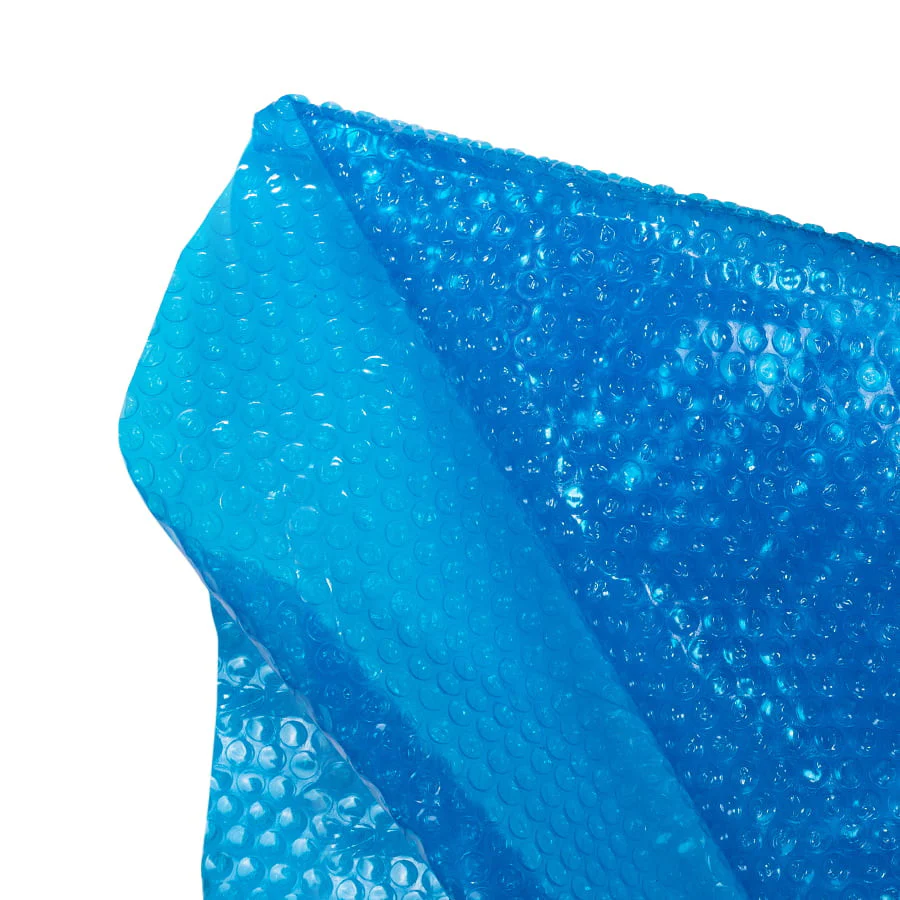
Common bubble covers sit with the bubbles on the water side and the smooth face up. Some products call for the material to lie flat or float for a period so the packing folds relax. Follow the directions for the blanket you bought. Confirm the intended reel end before you mark any corners or steps.
If the instructions permit trimming, mark the outline while following the manufacturer’s fitting method. Take the cover completely off the water and trim it on a stable surface away from the liner. Start conservatively, then recheck the fit before taking more off. A cut that’s too far inside the outline leaves an area uncovered.
Guide it away from sharp coping and abrasive edges when you remove it. Follow its storage directions, including recommended shade or a protective cover for a rolled blanket. Rinse and store it as directed when it comes off for the season. Use the product instructions to decide when to remove the cover during water treatments.
Solar cover FAQs
Covering the surface slows evaporation, which helps reduce heat loss while the pool is covered. The effect depends on how much water the blanket covers, how often you use it, and the sun, wind and outdoor temperature. In cooler weather, a cover can help a heated pool hold onto heat. It won’t maintain a set temperature by itself.
Check the instructions for the exact blanket and reel. Some systems specify an edge gap and other products fit to a different outline. Measure the full inside waterline when shopping. Apply the manufacturer’s fitting guidance when you’re ready to cut, rather than subtracting an assumed gap before buying.
Use it as a reference for the reel orientation, steps and corner shape. Confirm the current pool measurements and compare the old outline with the water surface before tracing it. If the old blanket has curled, torn or been cut too small, it can carry those fit problems into the new one.
Check the blanket maker’s removal directions. A smaller blanket can often be folded from the deck by hand. A reel can make a larger blanket easier to handle if you have a suitable installation location and a clear route for the cover and handle.
Use a bubble blanket for in-season evaporation and heat retention when the pool is unused. Winter and safety covers have their own purposes, installation requirements and product ratings. Plan for the right cover for the season and ask about rated safety-cover options if you need one.
Bring the inside waterline measurements, a simple top-down sketch, a photo of the pool entrance and the measurements for your preferred reel location. If there’s a particular blanket or reel you’re considering, include its product number or listing so the team can check the actual dimensions together.
Compare round, oval and rectangular pool solar blankets online. If you’re between two sizes or working around a projecting step, bring your measurements and photos to Custom LeisureScapes so we can help you compare a suitable cover and reel arrangement.


