You have 0 items in your cart



Updated August 2026
A complete hot tub installation in Ontario often adds about $2,000 to $8,000+ beyond the spa purchase price. A simple ground-level installation may stay closer to $1,500 to $3,500, while a complex project with electrical upgrades, deck reinforcement, difficult access, or crane delivery can cost $6,500 to $10,000+.
The final number depends on your property, not just the hot tub. In London, Stratford, and across Ontario, the biggest cost factors are delivery access, base preparation, electrical work, deck support, crane needs, and startup requirements.
Concise answer:
For most Ontario homeowners, a realistic hot tub installation budget is about $2,000 to $8,000+ on top of the spa price. Simple installs cost less, while long electrical runs, panel upgrades, deck reinforcement, crane delivery, or access changes can push the project higher.
This article focuses on the property work around the hot tub, not the cost of the spa itself. If you are still comparing models, start with Custom LeisureScapes’ hot tub options, then use this guide to understand what may be needed before delivery day.
A complete hot tub installation is more than dropping a spa in the backyard. The project needs a clear delivery route, a level base, safe electrical work, enough room for service access, and a proper startup process.
Some properties are simple. Others need fence panels removed, a crane booked, a deck reinforced, or an electrical panel reviewed before the spa can be installed safely.
| Installation Item | Why It Matters | Can Affect Cost? |
|---|---|---|
| Site visit | Checks access, placement, support, and layout before delivery | Yes |
| Delivery access | The spa needs a clear path from truck to final location | Yes |
| Base preparation | A hot tub needs a flat, stable, load-bearing surface | Yes |
| Electrical work | Most spas need safe dedicated power and ESA notification | Yes |
| Startup and training | Helps homeowners learn operation, chemicals, and water care | Sometimes |
A good installation plan protects the spa, the property, the warranty, and the people using the hot tub.
Every property is different, so these numbers should be treated as approximate planning ranges, not firm quotes. A simple backyard install in London or Stratford may be fairly straightforward. A tight yard, long electrical run, raised deck, panel upgrade, fence removal, or crane delivery can change the final cost quickly.
| Property Work | Approximate Planning Range | What Changes the Price? |
|---|---|---|
| Site visit or planning review | $0 to $250+ | Distance, project complexity, layout review, and whether a detailed site plan is needed |
| Standard delivery access | $0 to $800+ | Gate width, carry distance, stairs, slopes, tight turns, and labour required |
| Concrete pad or gravel base | $800 to $3,000+ | Excavation, grading, pad size, reinforcement, drainage, access, and finish |
| Electrical wiring and disconnect | $1,200 to $4,500+ | Panel capacity, distance from panel, trenching, wire run, amperage, disconnect location, and ESA process |
| Electrical panel upgrade | $1,500 to $4,000+ | Existing panel size, available capacity, utility coordination, and electrical contractor requirements |
| Deck reinforcement | $1,000 to $6,000+ | Deck age, height, framing, footings, beams, joists, engineering, permits, and access |
| Crane delivery | $800 to $2,500+ | Lift distance, crane size, street setup, obstacles, permits, timing, and site access |
| Temporary fence removal or access prep | $200 to $1,500+ | Fence type, gate width, landscaping, labour, repairs, and whether panels can be reused |
| Filling, startup, and water-care orientation | $0 to $500+ | What the retailer includes, water-care products, startup visit, training, and owner support |
Installer-style advice:
“The hot tub price tells you what the spa costs. The property tells you what the installation costs. Access, electrical distance, base prep, and deck support are usually where the budget changes.”
A site visit helps prevent surprises. It gives the installer a chance to look at the backyard before the spa arrives.
This is especially useful in London and Stratford, where properties can range from newer subdivision lots to older homes with narrow side yards, mature landscaping, decks, laneways, fences, and heritage considerations.
Planning tip:
A site visit is not just about where the hot tub looks best. It also checks whether the spa can get there, sit level, receive power, drain properly, and remain serviceable.
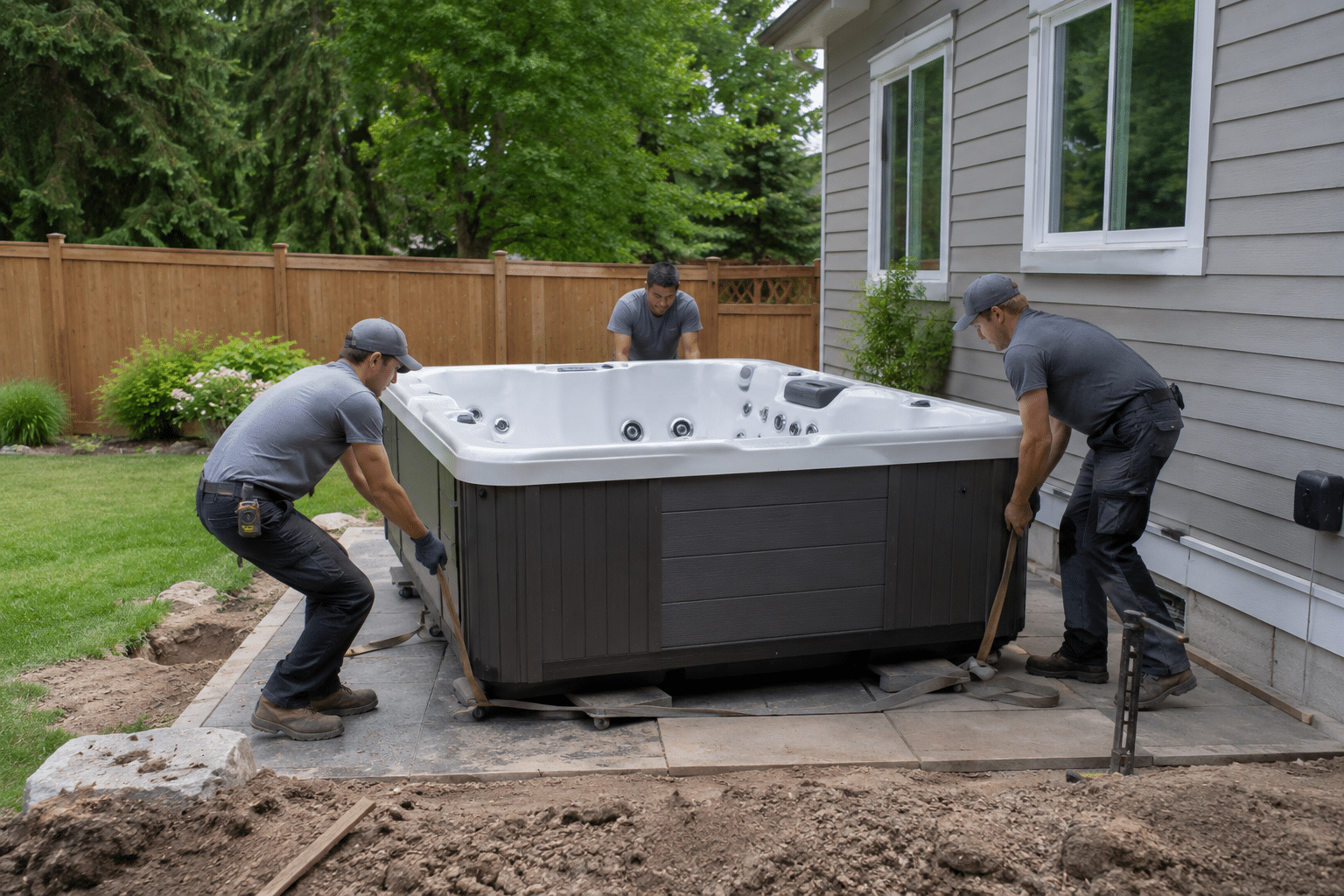
Hot tubs are large, heavy, and awkward to move. Even when the spa fits beautifully in the yard, it still needs a safe route from the delivery truck to the final spot.
Access issues can add labour, equipment, or crane costs. They can also change which spa size makes sense for your property.
| Access Issue | Why It Can Add Cost |
|---|---|
| Narrow gate | A fence panel may need temporary removal |
| Steep slope | More labour or equipment may be needed for safe movement |
| Tight side yard | The delivery team may not have enough turning space |
| No clear ground route | A crane may be needed to place the spa |
Take photos or videos of the delivery path before choosing your final model. This can help identify access problems early.
A hot tub needs a stable, level, load-bearing base. The base should support the filled spa, resist shifting, and allow the cabinet to sit properly.
Many homeowners use a poured concrete pad. Some projects may use a properly prepared gravel base or patio-style base, depending on the spa, property, drainage, and manufacturer requirements.
| Base Type | Best For | Cost Factors |
|---|---|---|
| Concrete pad | Permanent hot tub locations and long-term stability | Pad size, thickness, reinforcement, forming, excavation, grading, and access |
| Compacted gravel base | Some ground-level installations when prepared correctly | Excavation, compaction, border material, drainage, and site slope |
| Existing patio | Only when it is level, stable, and suitable for the spa load | Condition, slope, cracking, drainage, and manufacturer requirements |
Installer-style advice:
“Do not shortcut the base. A hot tub needs even support. A poor base can lead to cabinet stress, drainage issues, leveling problems, and service headaches.”
A filled hot tub is extremely heavy. The total load includes the spa, water, people, cover, accessories, and any snow or surrounding deck use.
An existing deck may not be designed for that load. Before placing a hot tub on a deck in London or Stratford, have the structure reviewed by a qualified professional.
Important:
Deck reinforcement can be a major hidden cost. It is better to find that out before the spa is ordered, not on delivery day.
Electrical work is often one of the biggest parts of the installation budget. Most full-size hot tubs need a dedicated electrical setup, proper wiring, a disconnect, and ESA notification.
In Ontario, hired electrical work should be handled by a Licensed Electrical Contractor. The electrical contractor should also manage the ESA notification process before work starts.
| Electrical Item | Why It Affects Cost |
|---|---|
| Panel capacity | Some homes may need extra capacity or a panel review |
| Wire distance | Longer runs usually mean more material and labour |
| Trenching | Buried wiring can add digging, conduit, backfill, and restoration work |
| Disconnect location | The disconnect must be planned safely and conveniently for the installation |
Do not treat hot tub wiring as a small add-on. It is a safety-critical part of the project and should be planned early.
Not every hot tub can be moved through a gate or side yard. Some properties need crane delivery to place the spa over a fence, garage, retaining wall, or other obstacle.
Crane delivery can add cost, but it can also protect the spa and property when ground access is not realistic. The cost depends on the crane company, distance, equipment, scheduling, street setup, and lift difficulty.
| Crane Factor | Why It Matters |
|---|---|
| Lift distance | Longer or higher lifts may need larger equipment |
| Road or driveway setup | Tight streets or limited setup space can complicate the job |
| Obstacles | Trees, wires, garages, fences, and slopes can affect the lift plan |
| Timing | The crane, delivery team, and site need to be coordinated carefully |
Planning tip:
If access is questionable, check crane needs before choosing a larger spa. The model size and delivery path should be planned together.
Sometimes the cheapest access fix is temporary fence removal. Other times, the delivery path may require moving planters, trimming branches, removing gates, lifting patio stones, or protecting grass and walkways.
These small jobs can still affect the schedule and budget. They can also create restoration work after delivery.
Installer-style advice:
“Walk the route with the spa dimensions in mind. If the path pinches at a gate, corner, stair, or AC unit, solve that before delivery day.”
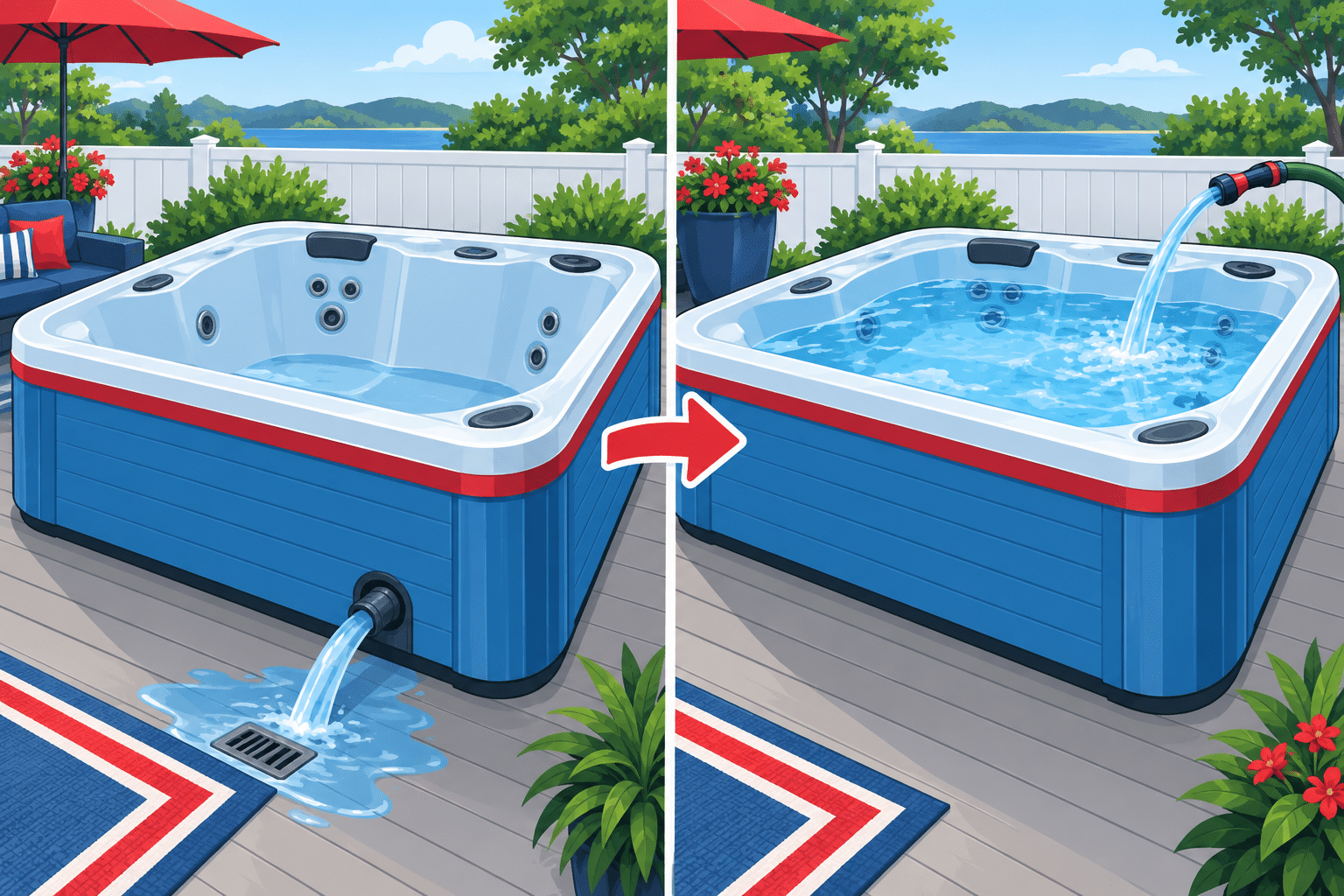
Once the spa is in place and the electrical work is ready, the hot tub still needs startup. This includes filling, checking operation, heating the water, balancing chemicals, and learning the basic care routine.
Orientation matters because new owners often underestimate water care. A few simple habits can protect the spa, reduce service issues, and keep the water clear.
| Startup Step | Why It Matters |
|---|---|
| Fill the spa | The water level needs to be correct before operation |
| Check circulation | Jets, pumps, valves, and filtration should run properly |
| Balance water | Proper chemistry protects bathers and equipment |
| Learn weekly care | Testing, sanitizer, filter cleaning, and cover care keep ownership simple |
Startup is not just the last step. It is the beginning of good ownership.
London and Stratford homeowners should plan the installation around the property, not just the spa. Older neighbourhoods may have tighter access, mature trees, fences, decks, and heritage questions. Newer subdivisions may have grading, drainage, side-yard access, and property-line concerns.
The right hot tub location should work for delivery, daily use, electrical planning, water drainage, privacy, and service access.
| Local Planning Item | Why It Matters in London and Stratford |
|---|---|
| Side-yard access | Narrow lots can make delivery more difficult |
| Deck height | Raised decks may need structural review or permits |
| Drainage | Water should not drain toward the house or neighbouring properties |
| Heritage areas | Exterior changes may need extra review on certain properties |
Local planning note:
The same spa can be easy to install on one London property and complicated on another Stratford property. The yard decides the installation plan.
The hot tub model affects the installation plan. Size, weight, electrical requirements, cover lifter clearance, service access, and delivery route should all be reviewed before the final order.
| Hot Tub Line | Installation Planning Focus | Helpful Next Step |
|---|---|---|
| Bullfrog Spas | Model size, therapy seating, cover clearance, service access, and electrical planning | Compare the spa location with how the cover lifter and service panels will work |
| MAAX Spas | Therapeutic models, water capacity, deck support, pad prep, and access clearance | Review the support surface before planning a raised deck installation |
| OWOW Hot Tubs | Canadian-climate use, base prep, electrical route, cover function, and final backyard location | Match the model to the yard access, base, and year-round use plan |
A better model comparison includes more than jets and seats. It should also include delivery path, base needs, electrical requirements, service access, and long-term placement.
Hidden costs usually happen when the property is not reviewed early. They are not always huge, but several small items can add up quickly.
Budget tip:
Keep a separate line in your budget for property work. That makes it easier to compare the real cost of the full project, not just the sticker price of the spa.
Your installation cost depends on your exact property. A simple ground-level pad near the electrical panel can be straightforward. A raised deck, long electrical run, tight side yard, or crane delivery can change the budget.
The best first step is to match the hot tub, location, access route, base, and electrical plan before construction starts.
Property-Specific Installation Checklist:
If you are trying to budget for the full installation, it helps to think in three categories: simple, typical, and complex. These ranges do not include the hot tub itself. They are meant to estimate the property work around the spa.
| Installation Type | Approximate Total Range | What It Usually Includes |
|---|---|---|
| Simple Installation | $1,500 to $3,500 | Easy delivery access, simple base, short electrical run, no crane, no deck reinforcement, and no major site changes |
| Typical Installation | $3,500 to $6,500 | Base preparation, standard electrical work, disconnect installation, delivery planning, startup, and minor access preparation |
| Complex Installation | $6,500 to $10,000+ | Crane delivery, long wire runs, trenching, panel upgrades, deck reinforcement, fence removal, difficult access, or more involved property work |
Simple budgeting rule:
If the hot tub can be delivered easily, placed on a prepared ground-level base, and wired without major electrical changes, the installation may stay closer to the lower range. If the yard needs a crane, deck work, panel upgrades, trenching, or access changes, the budget should move toward the higher range.
For London and Stratford homeowners, the most accurate way to estimate installation cost is to review the actual backyard. A free backyard consultation can help identify access issues, base requirements, electrical planning, delivery challenges, and model fit before the project begins.
Financing can help homeowners look at the full project instead of only the spa price. That matters because the complete budget may include delivery, base preparation, electrical work, steps, accessories, startup products, and site work.
Custom LeisureScapes offers access to flexible financing options, subject to approval. This can help you compare the full ownership plan with the hot tub model that best fits your backyard.
Smart budgeting advice:
Build your budget around the spa, the site, the electrical work, and the delivery plan. That gives you a more honest number than the hot tub price alone.
1. How much does hot tub installation cost in Ontario?
A complete hot tub installation in Ontario often costs about $2,000 to $8,000+ beyond the spa price. Simple installs may cost less, while complex installs with cranes, panel upgrades, deck work, or long wire runs can cost more.
2. What is the biggest hidden hot tub installation cost?
Electrical work, deck reinforcement, crane delivery, and base preparation are often the biggest surprises. The final answer depends on the property.
3. Do I need a concrete pad for a hot tub?
Many hot tubs sit on a concrete pad, but some projects may use another properly prepared base. The surface must be flat, stable, level, and suitable for the loaded spa.
4. Can a hot tub go on a deck?
Sometimes, but the deck must support the full weight of the spa, water, people, and accessories. Have the structure reviewed before installation.
5. Does hot tub delivery cost more if access is tight?
It can. Narrow gates, stairs, slopes, fences, tight turns, and blocked side yards can add labour or require crane delivery.
Plan the Full Hot Tub Project Before Delivery Day
If you are comparing hot tub installation cost in Ontario, the best next step is to review the spa and the property together. Custom LeisureScapes can help you compare OWOW Hot Tubs, MAAX Spas, and Bullfrog Spas with your real backyard conditions in mind.
A good plan looks at delivery access, base preparation, electrical needs, support, startup, water care, and long-term use. That is how you avoid surprises and choose a hot tub that fits your lifestyle and property.
Click here to explore current hot tub options. 🛁
Click here to book your free backyard consultation. 🌊✨
Want to spread out the upfront cost? View financing options here. 💳
 Optimized by Seraphinite Accelerator