You have 0 items in your cart



Quick Answer
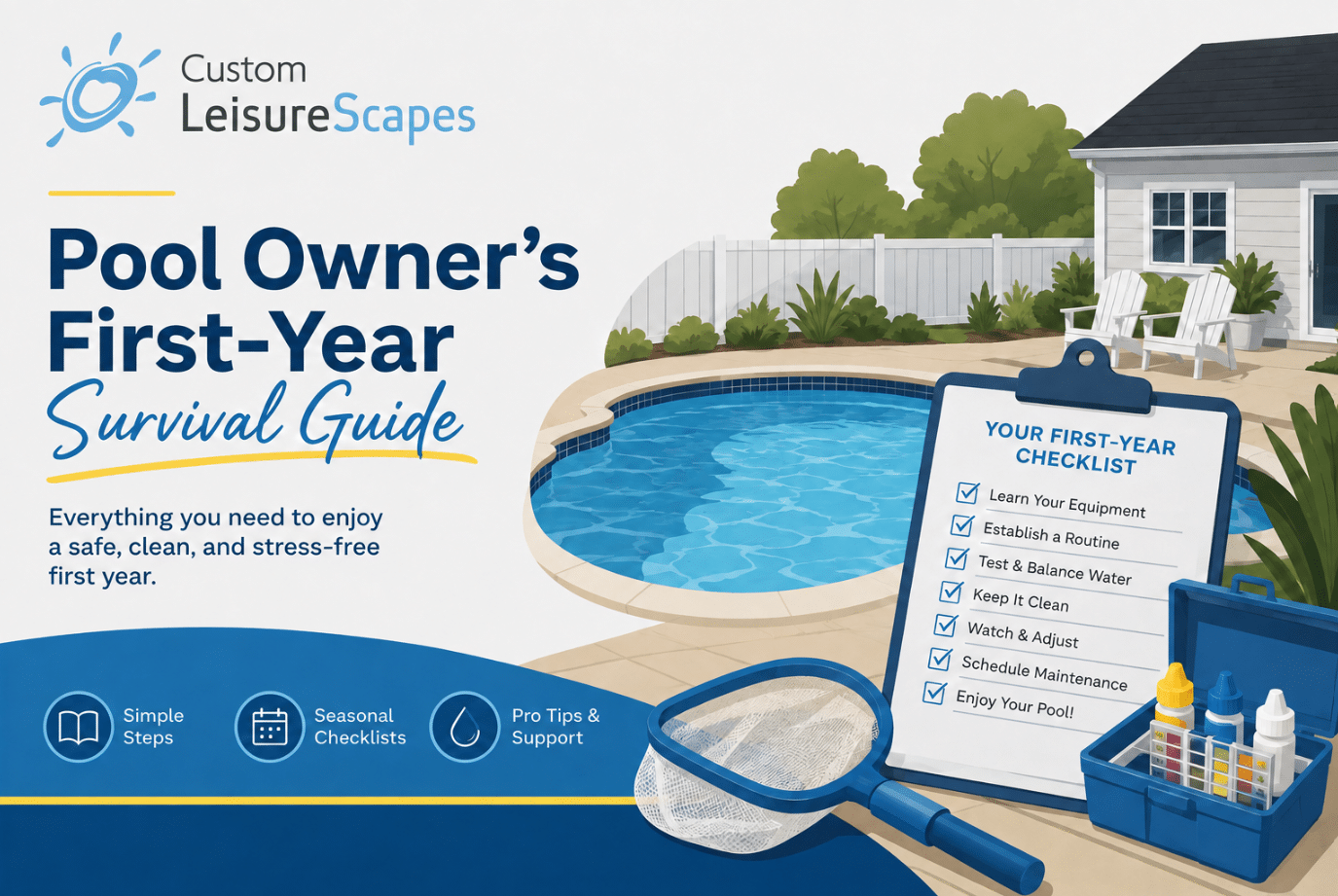
A first-time pool owner should learn the pump, filter, sanitizer and normal water level; establish a simple weekly inspection and cleaning routine; keep written records; prepare for storms and vacations; and schedule professional opening, repair or closing help before peak demand. Water treatment should always follow current test results, the specific product label and the equipment manufacturer’s directions. When water, circulation or equipment behaviour is unclear, use professional testing or an onsite diagnostic rather than guessing.
Start With Observation
The most useful first-month goal is not memorizing every pool term. It is learning what “normal” looks like for your own pool. Take photographs of the equipment pad, record model numbers, label valves only after their function is confirmed and note the clean operating pressure shown on the filter gauge. These details give you a reference when something later changes.
Find the skimmer, returns, pump basket, filter, heater controls, sanitizer, shutoffs and breaker. Ask which valves are part of normal operation and which should not be moved casually.
Record water level, water appearance, return flow, equipment sound and filter pressure. Learn where leaves collect and how quickly baskets fill after wind or rain.
Choose consistent days for testing, basket cleaning and visual inspection. Keep notes so a professional can distinguish a recurring pattern from a one-time weather event.
Pool chemical safety comes before convenience
Never mix pool chemicals, combine leftovers or improvise a dose. Keep products in their original containers, dry and secured away from children, pets, heat and incompatible materials. Follow each label and obtain a current water test before correcting an unfamiliar condition.
Interactive Guide 01
Select a month to see the normal planning focus for a London-area pool. Weather, pool design and service timing vary, so use this as a reminder system—not a substitute for the instructions for your pool.
May · Opening & Baseline Month
Complete the opening process, confirm circulation, establish a clean filter-pressure reference and obtain a water test. Photograph the equipment pad and record model information.
Interactive Guide 02
Pool care changes with the situation. Choose a mode to see the immediate objective, the homeowner’s preparation and the point at which professional help may save time or protect equipment.
Opening Mode
Opening is a system restart, not simply removing the cover. The water level, lines, pump, filter, fittings and controls need to return to normal operation before the pool settles into its weekly routine.
Prepare
Observe
Avoid
The Weekly Rhythm
A weekly routine normally includes looking at water clarity and level, checking circulation, emptying baskets as needed, testing water with the approved method, cleaning pool surfaces and inspecting the deck and safety barriers. The exact frequency changes with weather, debris, bather load and equipment.
Record unusual pressure, noise, water loss or recurring chemistry changes. Patterns are more useful to a technician than a single snapshot.
After Storms & Busy Weekends
Heavy rain, wind, heat and high bather use can change debris, water level and treatment demand. Recheck the pool instead of assuming last week’s routine still fits.
If water remains cloudy, circulation weakens or equipment will not operate normally, stop improvising and arrange qualified help through Custom’s onsite diagnostic service.
Interactive Guide 03
Tell the planner about your pool. It will organize a practical first-year checklist that you can copy or download. It deliberately avoids chemical dosages; use current water-test results and the directions for your exact products and equipment.
Your Personalized Routine
Use this as a planning framework and adjust it to current weather, water tests and the instructions for your system.
Weekly rhythm
Monthly review
Seasonal service and supply list
Your choices stay in your browser and are not submitted.
Interactive Guide 04
You do not need to repair every component yourself. You should know what each major component does, what normal operation looks like and when to stop and request service. Check off each item after someone has shown you the answer for your pool.
Learn Faster Without Learning the Hard Way
Similar-looking water problems can have different causes. Test first and follow the correct product and equipment directions.
Water care also depends on circulation, filtration and physical cleaning. A mechanical problem cannot always be corrected from a container.
Photograph and understand the normal valve configuration before making a change. Incorrect flow can damage equipment or interrupt circulation.
A gauge reading becomes more useful when compared with the documented pressure for a clean, normally operating filter.
Arrange a trusted check-in plan before travelling. Confirm circulation, current water condition, debris management and what the helper should do if something looks abnormal.
Opening and closing schedules fill quickly. Reserve your preferred window early and complete the homeowner preparation before the appointment.
Persistent water loss, electrical concerns, unusual equipment noise, weak flow or damaged safety components deserve professional attention—not another season of guessing.
Local Pool Ownership
A printed date cannot see an early frost, a wet spring, a hot stretch or heavy leaf fall. In London, Stratford and communities across Middlesex, Perth, Elgin and Oxford Counties, opening and closing decisions should reflect the current conditions, the pool system and the service schedule. That applies in St. Thomas, Strathroy, St. Marys, Dorchester, Woodstock, Ingersoll, Komoka, Grand Bend and surrounding Southwestern Ontario communities.
Custom LeisureScapes provides professional pool opening, pool closing, filter care, diagnostics and renovation support. Owners who want hands-on seasonal help can also review the Elite Concierge Service.
Professional de-winterization can restore lines and equipment, reinstall seasonal hardware and test operation.
A professional assessment can connect symptoms involving water, pumps, filters, heaters and circulation.
Filter care depends on the type, condition and operating behaviour of the pool system.
Professional winterization prepares plumbing, equipment, seasonal components and the cover for winter.
Follow the instructions for your pool, sanitizing system and test method. Test more often when the pool is newly opened, after heavy rain, during hot weather, after unusually high use or whenever water appearance or operation changes. A professional water test can provide a better starting point when results are uncertain.
Keep equipment model and serial information, the confirmed normal valve setup, clean filter pressure, water-test results, service dates, repair invoices and photographs. A brief log of recurring symptoms can make future diagnosis much easier.
Request professional help for electrical or gas concerns, equipment that will not operate normally, persistent leaks or water loss, damaged safety components, recurring cloudy or discoloured water, unusual noise, weak circulation or any task outside your training and equipment instructions.
Confirm current water condition and normal circulation before leaving, remove debris, empty baskets as appropriate and arrange for a trusted person or service provider to inspect the pool. Give that person clear instructions and a service contact rather than asking them to diagnose unfamiliar equipment.
Reserve a preferred service window in late summer or early fall rather than waiting for the first freeze warning. The actual closing date depends on the weather, intended use, pool type and professional recommendation. Review Custom LeisureScapes’ pool-closing service for preparation and scheduling details.
Yes. Custom LeisureScapes offers pool and spa supplies through its online shop. Match products to your pool and water-test results, and ask for help if you are uncertain about compatibility or use.
This guide provides general educational planning information. It does not replace product labels, manufacturer instructions, local requirements, current water testing or an onsite professional assessment. Never mix pool chemicals or work on electrical, gas or pressurized equipment without appropriate qualifications.
 Optimized by Seraphinite Accelerator