You have 0 items in your cart



Southwestern Ontario pool closing guide
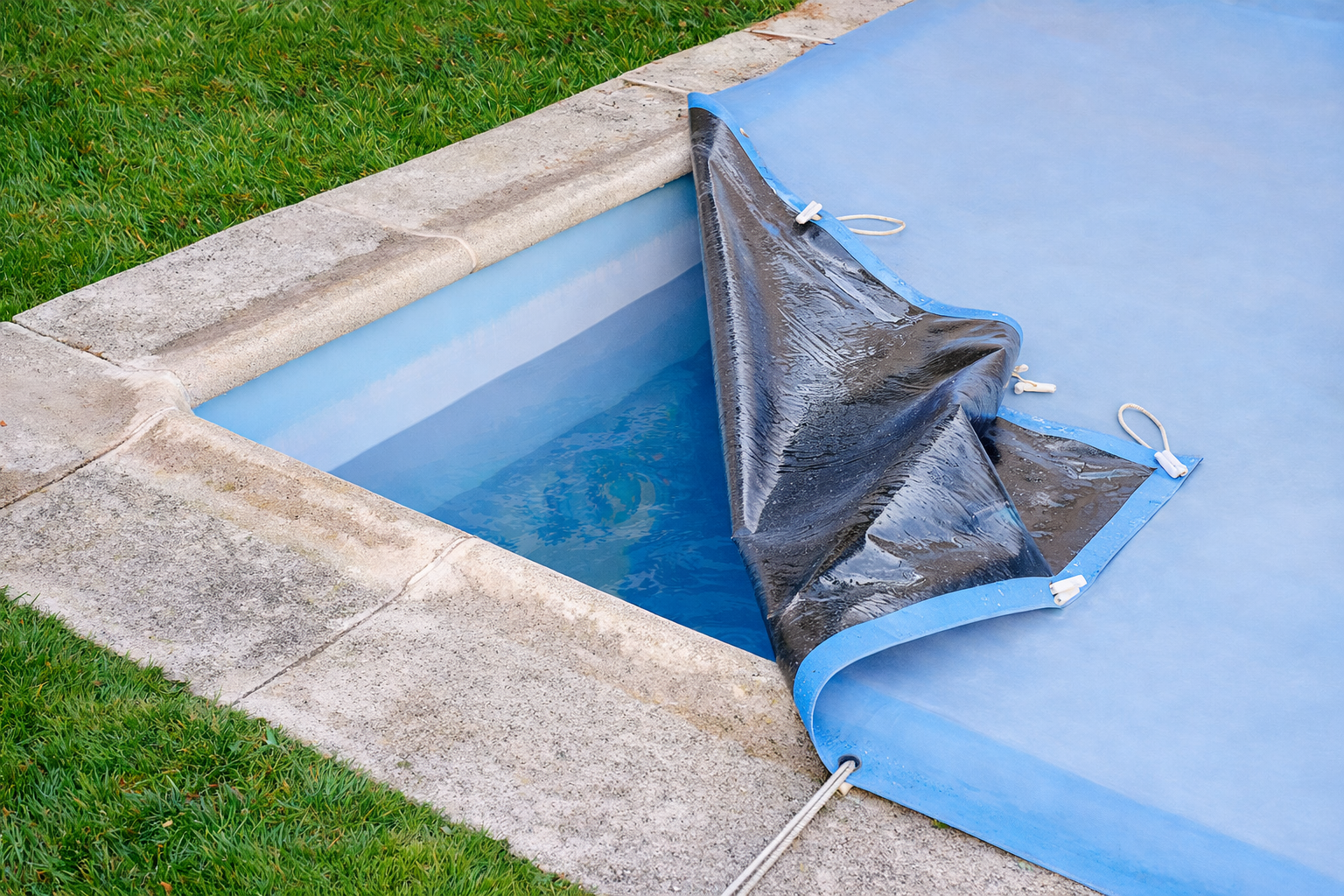
The cover is only the part you can see. A proper closing also protects the water, plumbing, pump, filter, heater and every connected line from Ontario’s freeze–thaw weather.
Interactive closing check
Choose only the items you can confidently confirm. This is a planning check, not a substitute for the instructions supplied with your pool, cover and equipment.
A winter cover can be straight and secure while water remains inside a pump housing, heater, filter or buried return line. The best review follows the path water takes through the entire pool system—not just what is visible at the surface.
The two questions that matter most: Were the plumbing lines cleared and protected, and was every water-holding component winterized according to its manufacturer’s instructions?
01
The pool should be skimmed, brushed and vacuumed as needed before closing. Water should be tested and adjusted for the pool surface and sanitizer system. Extra product is not a substitute for balanced water, and every chemical must be used according to its label.
02
There is no universal “winter line.” The right level depends on pool construction, skimmer protection and cover design. A permanent pool generally should not be emptied. Too little water can reduce support for the liner or structure, while the wrong level can also affect the cover.
03
Suction lines, returns and connected water features need the model-appropriate winterizing method. Plugs, valves and approved pool-grade antifreeze may be part of that plan. Lowering the water below a fitting does not prove that a buried line is protected.
04
Pumps, filters, heaters, salt systems, chlorinators, cleaners and accessory lines can retain water differently. Drain points and small fittings need to be accounted for. Do not force fittings or energize winterized equipment to “test” it.
05
The cover should sit as its manufacturer intends, using the correct anchors, cable, weights or water-management method. It is never a walking surface. Inspect it safely after major wind, precipitation and freeze–thaw events.
Buried plumbing is where a visual inspection tells you the least.
A pump basket, filter tank, heater or feeder holding water needs prompt attention.
Unexpected loss may indicate a leak, displaced plug or cover-related problem.
Loose anchors, tears, severe sagging or a displaced cover should be corrected safely.
Wall movement, liner pull, erosion or a shifted base calls for professional assessment.
A new heater, salt system, water feature or renovation may change the closing sequence.
Safety first
Keep people and pets away from an unstable cover or pool structure. Never walk on a winter cover or improvise around gas equipment, electrical controls or pressurized plumbing. If the pool is already frozen, get advice before removing plugs, opening valves or changing the water level.
After closing day
A quick look after major wind, rain, snow or a sharp temperature swing can catch a cover problem, unexplained water loss or disturbance around the equipment area early.
Inspect from a safe position
Confirm that the cover and its securing system remain where they belong. Follow the cover maker’s directions for water and snow management.
Compare the water level
Closing-day photos make changes easier to notice. Contact a professional before making adjustments if the level has dropped.
Leave winterized equipment alone
Do not reconnect power, reinstall drain plugs or move valves simply to check the system.
Custom LeisureScapes service
Custom LeisureScapes’ current closing service covers core winterization work, including equipment preparation, line blow-out and plugging, a closing chemical kit, removable hardware, cartridge removal where applicable, and winter-cover installation.
An onsite diagnostic can connect visible symptoms with the plumbing and equipment you cannot fully assess from the deck.
Confirm five systems: clean and balanced water; a water level appropriate to the pool and cover; protected plumbing; drained and winterized equipment; and a correctly secured cover. If you cannot confirm plumbing or equipment work, have it checked before sustained freezing.
No. Do not completely drain a permanent pool as a general winterizing step. The correct level depends on the pool, liner, skimmer protection and cover system. Follow the manufacturer and installer directions.
A fully winterized seasonal pool normally has its circulation equipment shut down, drained and protected according to the equipment instructions. If the system is still powered or holding water and you are unsure why, contact a pool professional.
Do not pour unfamiliar products through a cover or mix chemicals. Identify the sanitizer system, products already used and current water condition, then ask a pool-care professional for a safe, label-compliant plan.
Stay off the cover and inspect from a safe position. Follow the cover manufacturer’s directions for water and snow management. A displaced cover, loose anchors, unexplained water loss or severe sagging should be assessed promptly.
Late September through October is a common window, often once water is consistently around or below 15°C. The actual date should reflect current weather, pool temperature, tree cover, how long you plan to swim and service availability.
Close with confidence
A short service visit before sustained freezing is easier than discovering damage at spring opening.
 Optimized by Seraphinite Accelerator