You have 0 items in your cart



Quick Answer
There is no single best hot-tub seat. A lounger is usually best when stretching out, leg therapy and full-body relaxation are priorities. Upright therapy seats are easier for conversation and can place the body more consistently against back and neck jets. A cool-down seat sits higher in the water and can also make entry and exit easier. The best spa usually combines the seat types, depths and jet locations that fit the people who will use it most often.
Start With the Layout
Two spas with the same listed capacity can feel completely different. Seat angle changes how your body rests against the shell, seat depth changes where the waterline reaches, and the location of jets determines which muscle groups receive the strongest massage.
A lounger supports a reclined position with the legs extended. Depending on the model, jets may continue from the back into the hips, calves and feet. Loungers are excellent for recovery and long solo soaks, but they use more interior space than upright seating.
Upright seats keep bathers facing the centre of the spa and usually preserve more shared legroom. Deep upright therapy seats can be especially useful when you want the shoulders and back held consistently against a targeted jet pattern.
A shallow cool-down seat holds you higher in the water when you want a break from full immersion. On some designs the same raised area also functions as an entry step, which can make moving into and out of the spa more comfortable.
A high jet count does not automatically mean a better massage. Look at where the jets sit relative to your neck, shoulder blades, spine, lower back, hips, calves and feet—and whether that placement actually matches your body.
Interactive Guide 01
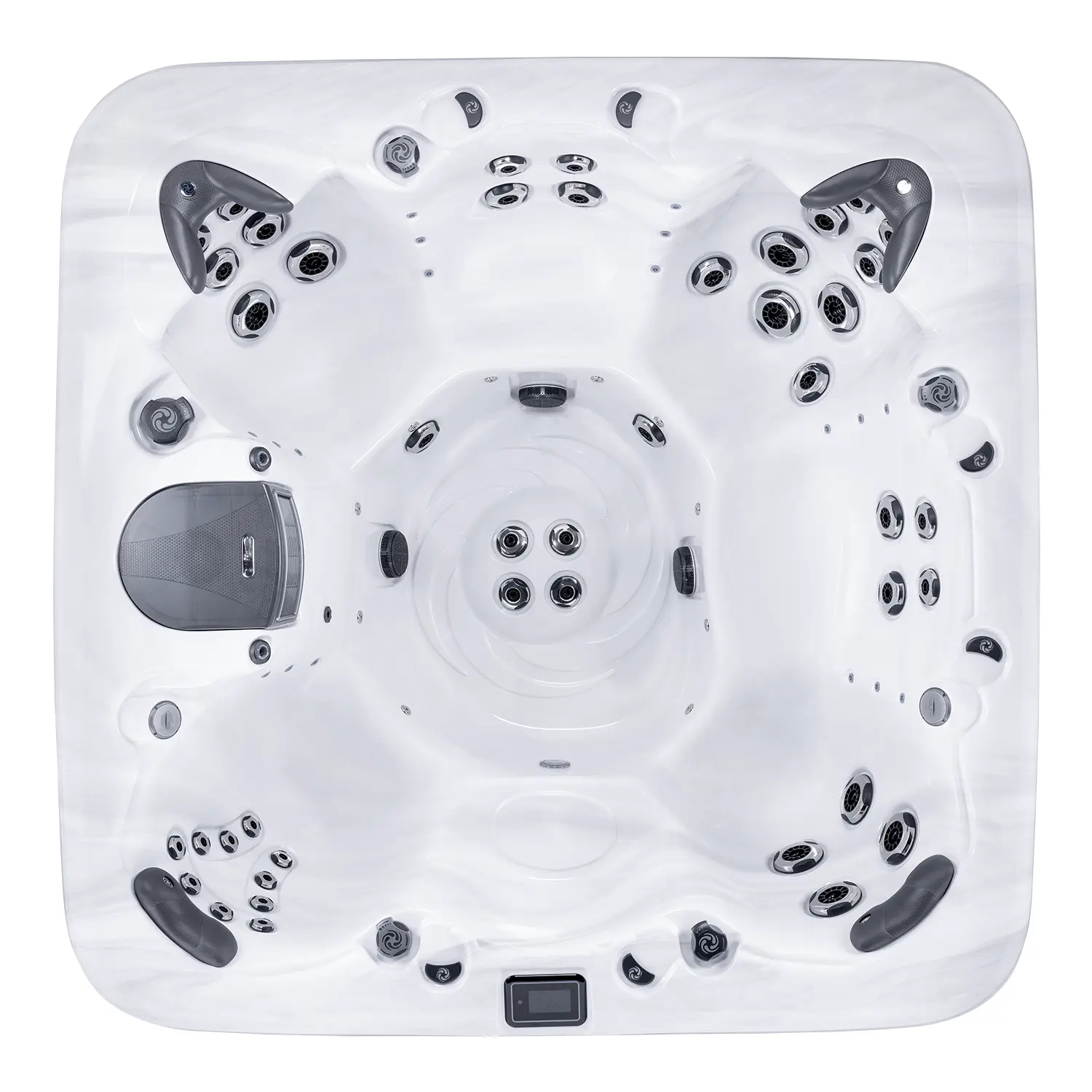
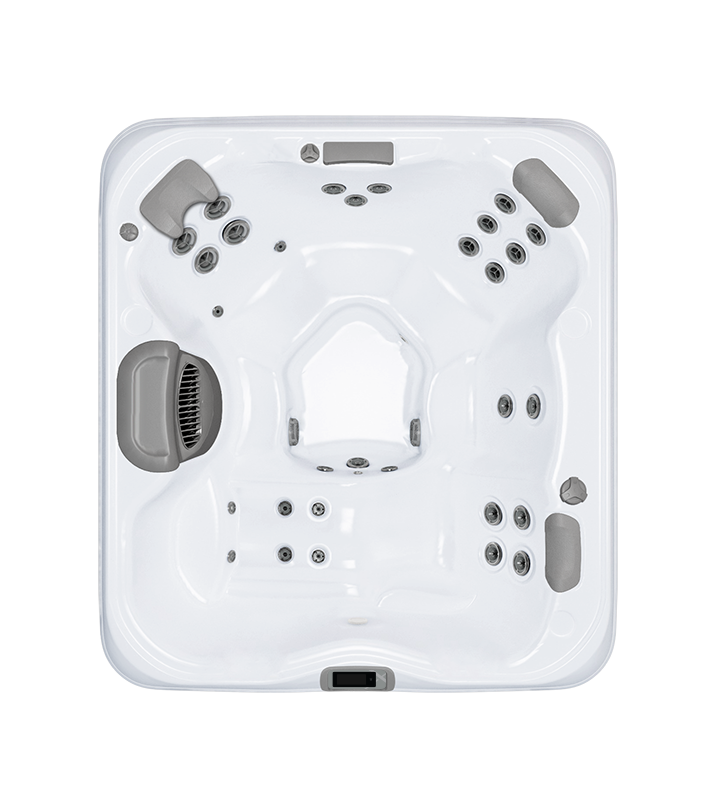
These are actual overhead product images from Custom LeisureScapes. Choose a spa and click the numbered markers to see how the seat layout changes the experience.
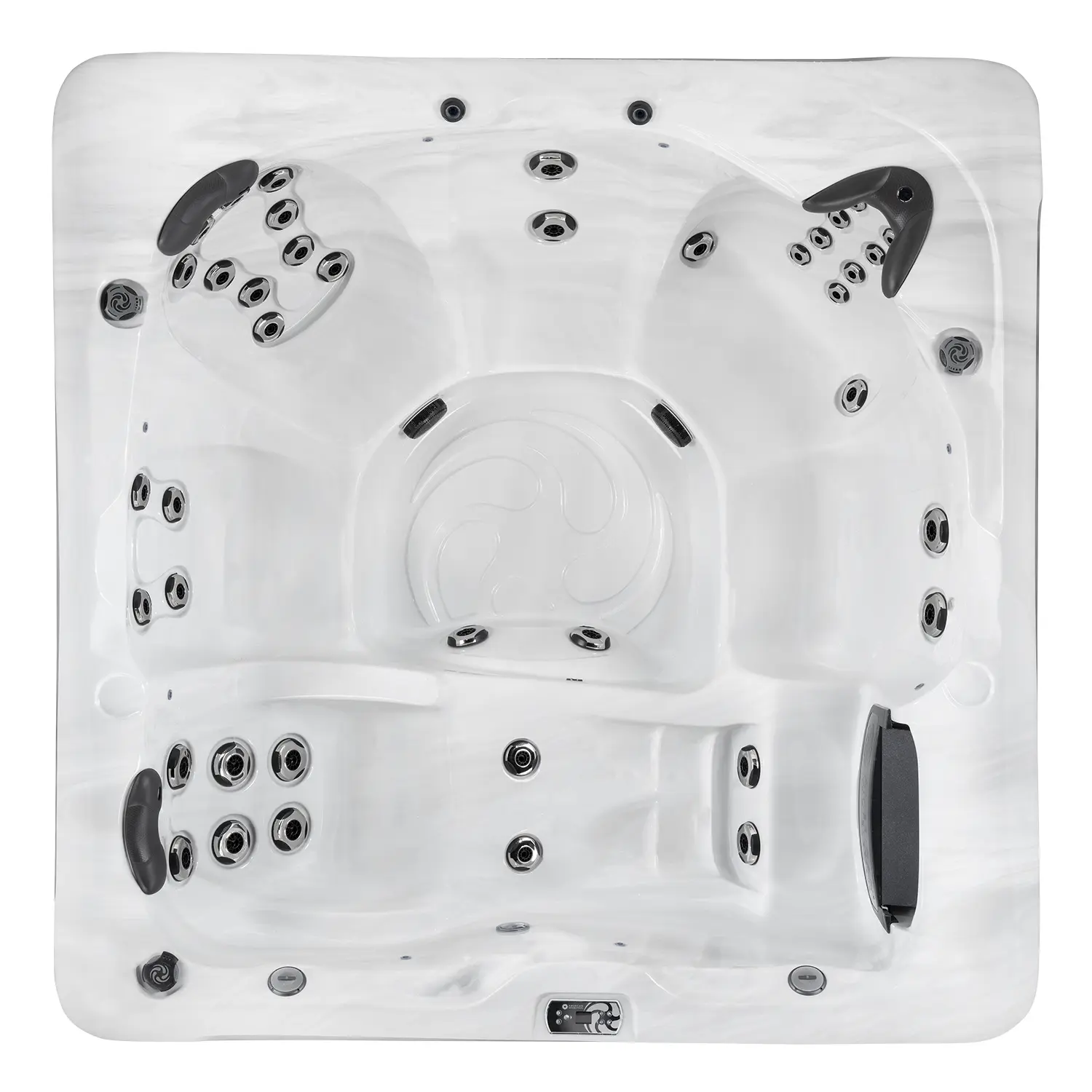
Click a numbered marker. Markers are a shopping guide for the visible seating layout, not an engineering diagram.
MAAX 281 · 6 Adults
The MAAX 281 combines a full-length Performance Lounger with upright therapy seating, including a dedicated neck-massage seat.
Selected Seat Detail
This reclined position is the seat to compare when you want full-body support with therapy extending into the lower body.
Why Dry-Testing Matters
A deeply sculpted seat may feel secure to one person and restrictive to another. Taller users may sit higher against the shoulder jets, while a shorter user may float forward in a long lounger. Sitting in the empty spa can reveal a lot before water is ever added.
Household Reality
If two people both want the same deep therapy seat, the spa may feel less versatile than the capacity number suggests. Couples and families should test several positions and imagine where everyone will sit on a normal evening—not only when every advertised seat is occupied.
A Useful Pause Seat
A shallow seat can let someone sit higher, take a break from full immersion or transition in and out of the spa. For households with different comfort preferences, that extra seating height can be surprisingly useful.
Interactive Guide 02
Choose the area you care about most. The guide will show several current models whose documented seat or jet layouts are worth comparing in person.
Neck & Shoulder Focus
Neck therapy depends heavily on seat depth and body height. These current models have documented upper-body therapy features worth comparing.
MAAX 480
Two Comfort Collar seats target the neck and upper shoulders.
MAAX 281
Includes a dedicated upright neck-massage seat alongside the Performance Lounger.
Bullfrog X6L
Its documented jet configuration targets the neck, shoulders and upper back.
Jet Count vs. Jet Placement
Compare what the jets are doing. A dedicated foot dome, lower-body jets in a lounger, a neck collar or interchangeable therapy back can matter more to you than simply choosing the largest total number.
Floating in a Lounger
A long reclined seat may fit one person perfectly while another feels pushed forward. This is one reason to compare real seat geometry rather than buying from dimensions alone.
Open Footwell
Families and groups should look at where knees and feet meet. Open models such as the MAAX 480, Bullfrog X7 and OWOW 112 preserve more central space than layouts dominated by long loungers.
Interactive Guide 03
Answer a few practical questions. The tool compares the documented layouts and features of the models in this guide and gives you three hot tubs to look at first.
Your Hot-Tub Matches
Your answers favour a mix of lounge and upright seating, with extra emphasis on back therapy. These same three models are carried into your wishlist below.
Your results will update here when the page loads or when you change the quiz.
Your answers stay in this browser and are not submitted until you choose to send the form.
Interactive Guide 04
Your three best matches from the quiz are carried into this section automatically. Add your budget and any extra features you care about, then send the complete result directly into the Custom LeisureScapes contact form.
Your Current Best Matches
Your results will appear here automatically.
Choose as many as you like.
Your best-match models, household answers, budget, timing and feature selections will all be included.
Choose your wishlist items, then send them directly into the form below.
Send Your Results
Click Send My Matches to Custom LeisureScapes above and this form’s message area will be filled with your hot-tub matches and wishlist. Then add your contact information and submit.
Before You Choose
Imagine the spa filled. Is the seat so deep that the water would be near your chin, or so shallow that your shoulders stay exposed?
Do not force yourself down to meet the jets. Your normal seated position should line up with the therapy pattern.
Check where your heels, calves and lower back land and whether you feel naturally supported rather than wedged into place.
A good layout should give you more than one comfortable position. Try the shallow seat, deeper corner seats and central foot space.
The seat that feels perfect to one person may fit another very differently. A shared purchase should be tested by the people sharing it.
A lounger is usually better when you want to recline, stretch the legs and combine back therapy with calf or foot massage. Upright seating generally provides more group space and makes face-to-face conversation easier. Many households prefer a spa that offers both.
A cool-down seat is shallower than the main therapy seats, so more of your upper body stays above the water. Depending on the spa design, it may also double as a step for entering or leaving the hot tub.
They can be, but the answer depends on the length and contour of the specific lounger. Taller users should check knee position, heel support and whether their shoulders remain aligned with the back jets.
Not automatically. Jet style, pressure, pump configuration, seat contour and placement relative to your body all affect the massage.
Families often benefit from varied seat depths and open footwell space. A shallow position can suit someone who wants less immersion, while deeper corner therapy seats can suit adults who want stronger back or shoulder massage.
Online specifications are useful for narrowing the list, but seat comfort is personal. Once you have identified a few likely models, compare their seat depths, contours, jet locations and legroom in person whenever possible.
The Best Seat Is the One That Fits You
Use your quiz results and feature wishlist to narrow the search, then compare the real seating positions before deciding.
 Optimized by Seraphinite Accelerator