You have 0 items in your cart

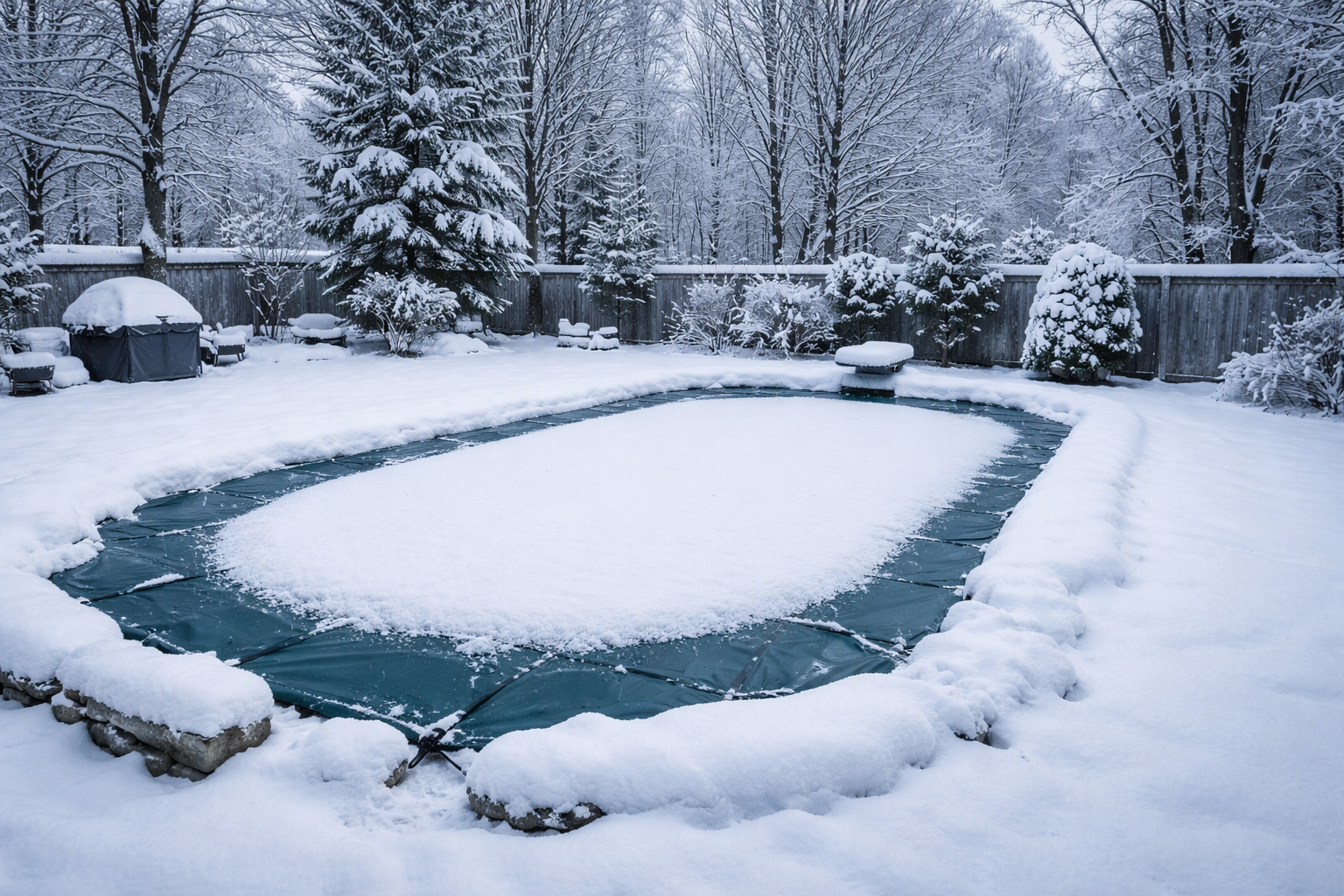


Southwestern Ontario winters are notoriously tough on outdoor investments. Between the deep freezes in Stratford and the heavy snow melts in London, your pool equipment goes through a lot of stress while it sits dormant.
As you prepare for the 2026 season, “crossing your fingers” and flipping the switch isn’t enough. At Custom LeisureScapes, we’ve seen it all—from hairline fractures to complete motor failures. Here are the five most common signs that the winter won the battle against your equipment, and how to fix them before swim season starts.
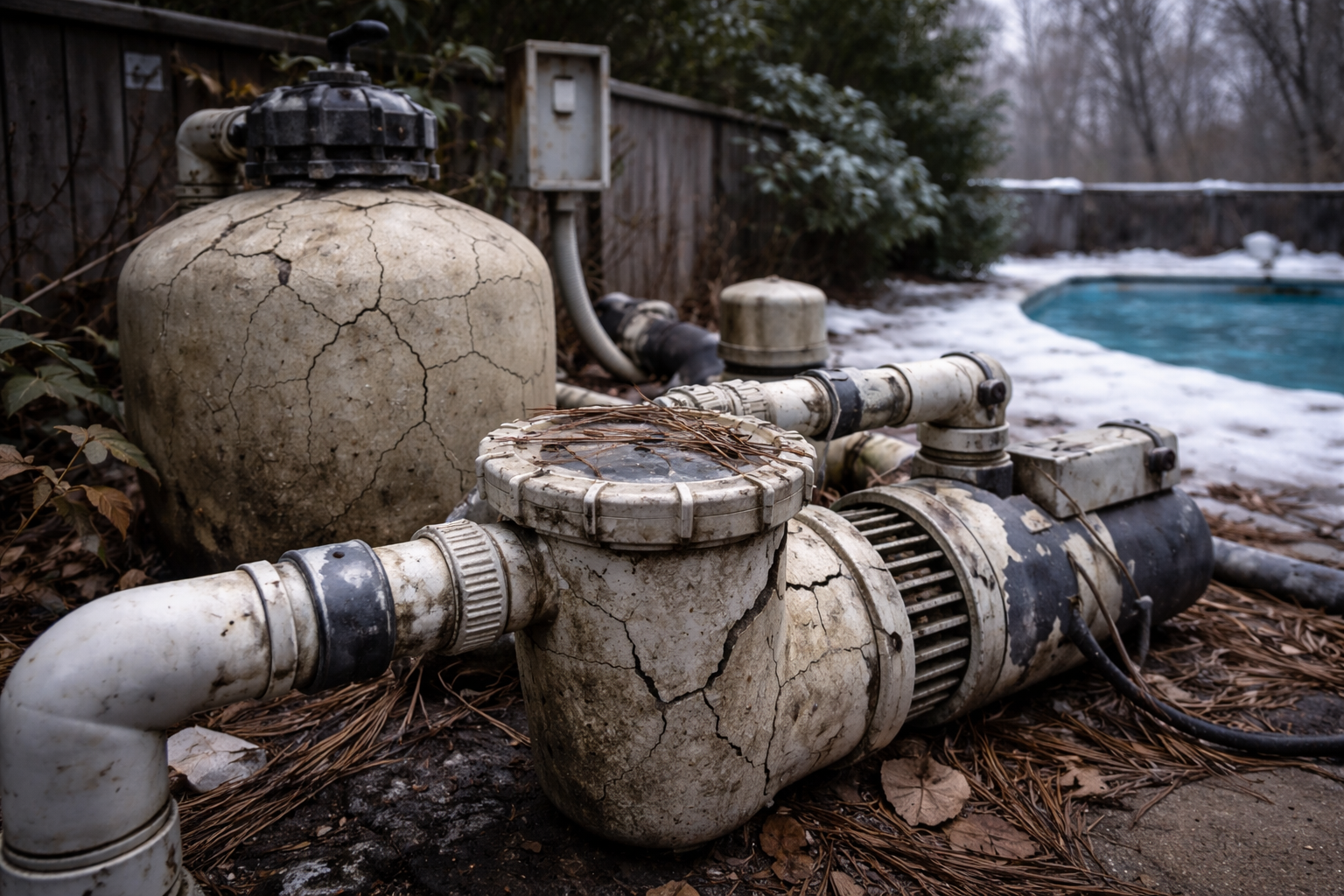
Water expands as it freezes. If even a small amount of water was trapped in your pump basket or filter tank over the winter, it can cause the heavy-duty plastic to split.
The Sign: You notice water weeping from the side of the equipment, or a visible “spiderweb” crack in the plastic.
What to Do: Do not try to patch these with epoxy; the pressure of the system will eventually blow the patch off. Cracks in pressure-vessels usually mean the housing or the entire unit needs replacement for safety.
When you flip the breaker for the first time, your pump should hum quietly. If it sounds like a jet engine or just hums without spinning, you have a problem.
The Sign: Metal-on-metal screaming (bearing failure) or a stagnant hum (seized shaft/capacitor issue).
What to Do: This is often caused by moisture getting into the motor during the off-season. An expert can sometimes replace the bearings, but if the motor is old, 2026 is a great year to upgrade to an energy-efficient variable speed pump.
Your pressure gauge is the “heart rate monitor” of your pool. If it stays at zero while the pump is running, or if it’s stuck at a high number even when the pump is off, the winter frost got to it.
The Sign: A needle that doesn’t move or a gauge that is leaking water from the dial.
What to Do: This is an easy, inexpensive fix. Replace the gauge before you start balancing your chemicals, as you need an accurate reading to know when to backwash or clean your cartridges.
If you have a sand filter, the “spider gasket” inside the handle can freeze and shrink, or the valve body itself can crack.
The Sign: Water is constantly trickling out of the “waste” line even when the valve is set to “filter,” or water is spraying out from under the handle.
What to Do: If the body is cracked, you’ll need a new valve. If it’s just a leak from the ports, a gasket replacement usually does the trick.
It’s not just the cold that ruins heaters; it’s the guests. Field mice often move into pool heaters in London and Stratford backyards to escape the snow, chewing through wires to build nests.
The Sign: Your heater won’t ignite, or the digital display shows “Service Heater” or “Sensor Failure” codes.
What to Do: Shut off the gas immediately and call a pro. Attempting to start a heater with chewed wiring or a nest inside can be a fire hazard.
The best way to catch these issues is with a professional opening. When our teams at Custom LeisureScapes open a pool, we perform a full “System Health Check” to identify these failures before they turn into mid-summer headaches.
 Optimized by Seraphinite Accelerator